
10 Testimonial Pages You’ll Want to Copy
When potential customers are researching your company online, on f the ways they’re getting to know you is by way of the content of your website. Understandably, many of them might be skeptical or hesitant to trust you right away.
To prove the value of what you have to offer, why not let your happy customers do the talking?
Your testimonial page is a platform to show off how others have benefited from your product or service, making it a powerful tool for establishing trust and encouraging potential buyers to take the next step and buy from you and your business.
Plus, having a testimonial page serves as yet another indexed page on your website containing content covering product features, pain points, and keywords your marketing team is trying to rank for in search.
To generate these glowing testimonials, you need to know who your happy, successful clients are — and that’s where collecting and analysing customer feedback comes in. Once you’ve found those customers and collected their reviews, it’s time to turn that enthusiasm into effective, affordable marketing materials.
What Is a Testimonial?
First, let’s have a little vocabulary lesson. Google’s dictionary definition of testimonial is “a formal statement testifying to someone’s character and qualifications.” These usually come from customers, colleagues, or peers who have benefited from or experienced success as a result of the work you did for them.
But effective testimonials go beyond a simple quote that proclaims your greatness. They need to resonate with your targeted audience, and the people who could also potentially benefit from the work you do in the future. That’s why great testimonials also tell a story – one that inspires and motivates the people reading it.
Testimonial Examples
There are many different ways a business can display customer testimonials — And when determining the best approach for your business it’s important to keep in mind that different formats and mediums can have varying effects on your target audience. You’ll want to use a format that’s viewable for your potential leads and aligns closely with their values. To help give you an idea of how testimonials can be portrayed, below are 10 testimonial examples that you can use to show off your customers’ stories.
1. Quote.
2. Video
3. Audio
4. Case Study
5. Social Media
6. Customer Interviews
7. Authority / Influencer
8. Peer Review
9. Blog Post
10. Press Review
Testimonial Design Best Practices
While customer testimonials can appear in many formats, there are still some common guidelines you should follow regardless of which approach you decide to go with. Including these three elements should make your customer testimonial feel more genuine for your target audience.
1. Visually Engaging
The best testimonials paint a picture with words so readers can learn exactly what the value of making a purchase from you would be. Be sure to feature testimonials with descriptive language that’s enthusiastic and detailed to help convince your prospects to make a purchase.
Take your testimonial page one step further by including more visual elements – images, videos, and social media feeds are relatively easy ways to make testimonial content more engaging – and to prove to readers that the testimonial is coming from a real person or brand.
2. Specific
Make sure the testimonials you feature dig deeper than “I love [brand name]!”
Choose reviews from customers who can highlight specific use cases for your product or service so readers can envision their own specific use cases your brand could help with. Ideally, your customers will agree to serve as case studies, and you’ll be able to publish comprehensive stories with specific details your sales team can share with prospects.
3. Aligned
Highlight testimonials that align with specific features of your product or service – and connect the dots for readers by linking to different product or tool pages so readers can learn more about what they’ve just read about. If there are relevant images or demo videos you can share alongside these specifically aligned testimonials, all the better.
What do these look like in action? Check out the examples below to find your own inspiration to help you start building a great testimonial page today.
Testimonial Page Examples
- Codeacademy
- Bluebeam
- ChowNow
- mHelpDesk
- Clear Slide
- FreeAgent
- FocusLab
- 99designs
- Slack
- Dribbble
- BioClarity
- HubSpot
1. Codecademy
Codecademy has a fantastic testimonials section of their website, which they call “Codecademy Stories.” They’ve even included several customer quotes (along with pictures, names, and locations) right on their homepage above a link to the testimonial page.
We really like the approachable format and the fact that they chose to feature customers that other users can really relate to. When you click into any story, you can read the whole case study in a Q&A format.
2. Bluebeam
Many companies struggle to grab people’s attention using their testimonial pages, but Bluebeam does a great job of catching your eye as soon as you arrive on the page. Scroll down on their site and you can also click on video case studies, as well as view customer panels.

3. mHelpDesk
Visit mHelpDesk’s testimonial page, and you’ll see videos and text testimonials equipped with pictures.
Some of the testimonial videos aren’t production-quality, but they get the message across and cover useful and relevant information – which goes to show you don’t need to invest thousands in production to get some testimonial videos up. Finally, in the theme of earning trust, we love that mHelpDesk closes out its testimonial page with awards and badges of recognition.

4. Clear Slide
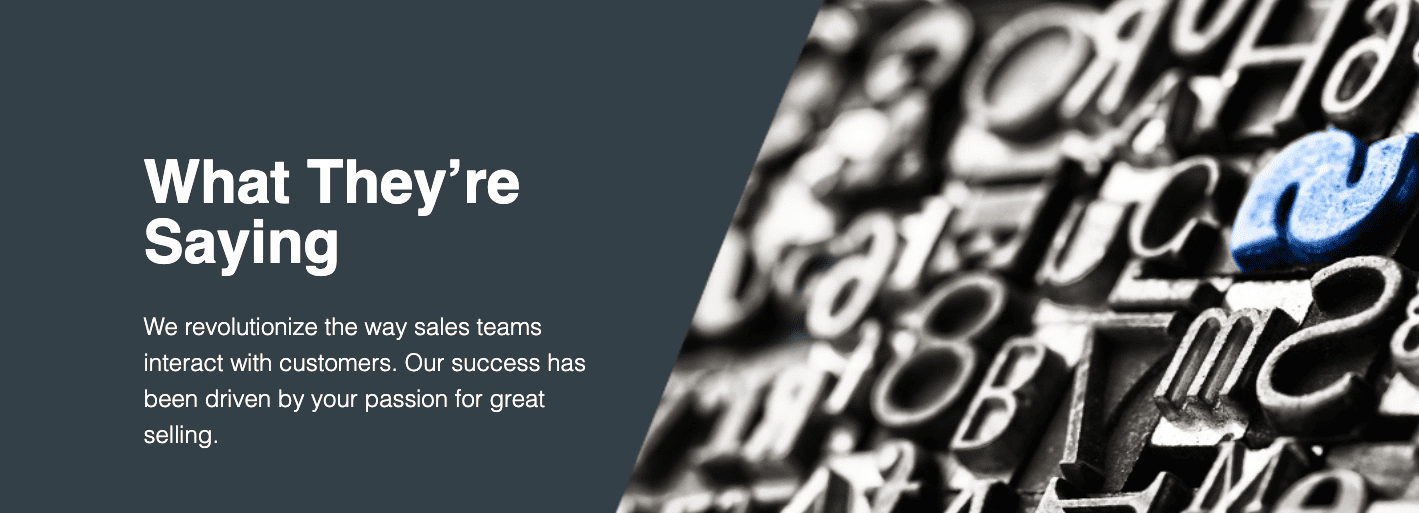
One of the first things you’ll notice about Clear Slide’s testimonial page is how creatively it’s named – “What They’re Saying.” It includes a smattering of quotes from customers, topped with client logos from big names like The Economist and Starwood. If you have users that are celebrities or influencers within their community, be sure to include and even highlight their testimonials on your page.
5. FocusLab
FocusLab took a unique and very cool-looking design approach to its testimonial page – which is fitting, seeing as its trade is in creating visual branding systems. Again, it’s technically a visual catalog of both previous projects and works-in-progress, but instead of just listing out client quotes, the page opts for a card-like design with interactive, rectangular elements you can click on to see the full case study – with quotes occasionally appearing in-between.
What’s even cooler is what’s included in each individual case study. Not only does FocusLab cover the challenges faced by clients and how FocusLab helped solve them, but the case studies also include some of the steps in the design process between conception and final product. In some instances, they included the evolution of the logo during the design process.
Finally, we love the aforementioned view of works in progress section below the case studies. These cards aren’t clickable, but they give viewers a glimpse into the firm’s current projects.

6. 99designs
99designs takes a bit of an unconventional approach to its testimonial page. Using a star-rating system not usually seen in the B2B sector (read: Yelp and TripAdvisor), the page is headlined with an eye-catching video, with customer reviews below it. Plus, it gives users the ability to sort through customer reviews by category so they can read the ones most relevant to them.

7. Slack
Slack’s customer testimonials are cleverly nested on its product features page – which might seem confusing, until you realise the choice was deliberate.
Slack uses individual testimonials to highlight specific key product features and how the customer used them – a genius way to give a tour of a product while also letting happy customers sing your praises. Plus, it doesn’t hurt that Slack also uses beautiful illustrations to showcase those product features.
A whole host of companies who have collaborate with Slack are also shown on a carousel at the bottom of the page.
From each blurb, visitors can click to learn more about the specifics of that customer case study to get even more insights – and positive reviews.

8. Dribbble
Dribbble’s testimonial page is relatively simple (considering the fact that Dribbble is an online community for showcasing art and design work), but what we love about this page is how honest and straightforward the user reviews are.
It’s quickly clear to a reader that these testimonials haven’t been altered or edited – which lends the site a degree of authenticity and trustworthiness that might convince someone to start using the product.

9. BioClarity
BioClarity’s cruelty-free, plant-derived skincare line is about one thing: being green. Green is all over the website, and its Instagram is covered in images of people applying green serums to their faces.
In this case, pictures serve as better testimonials than words – but BioClarity still uses both. On its results page, visitors can see transformation photo collages of customers before and after using the product, as well as enthusiastic videos and words of recommendation – all in a soothing green theme.
From the results page, visitors can also click into the reviews page to read in-depth product reviews from real customers.

10. HubSpot
On HubSpot’s testimonials page, they features enthusiastic customer reviews – alongside a note if that customer switched to HubSpot from a different software brand. That detail helps drive the point(s) of the customer home – it takes time, money, and effort to start using completely different software, but the testimonials make it clear that the change was worth it for the customer.

Spread the Love
Once you’ve created a testimonial page, don’t forget to promote it. Send it to the customers you featured, your sales staff, and even to your other customers if you think they’d be interested. And don’t forget to add a link to your testimonial page on your homepage, in your “About Us” page, or as part of your overall navigation.